 Image 1 of 1
George Brookshaw was born in Birmingham, England, and spent the early stages of his career building fine cabinets detailed with hand-painted botanical motifs. His clientele included none other than the Prince of Wales and examples of his cabinetry may be seen today at the Victoria & Albert Museum, London. However, after a period of financial difficulty, Brookshaw turned to botanical illustration and gave flower-painting lessons.
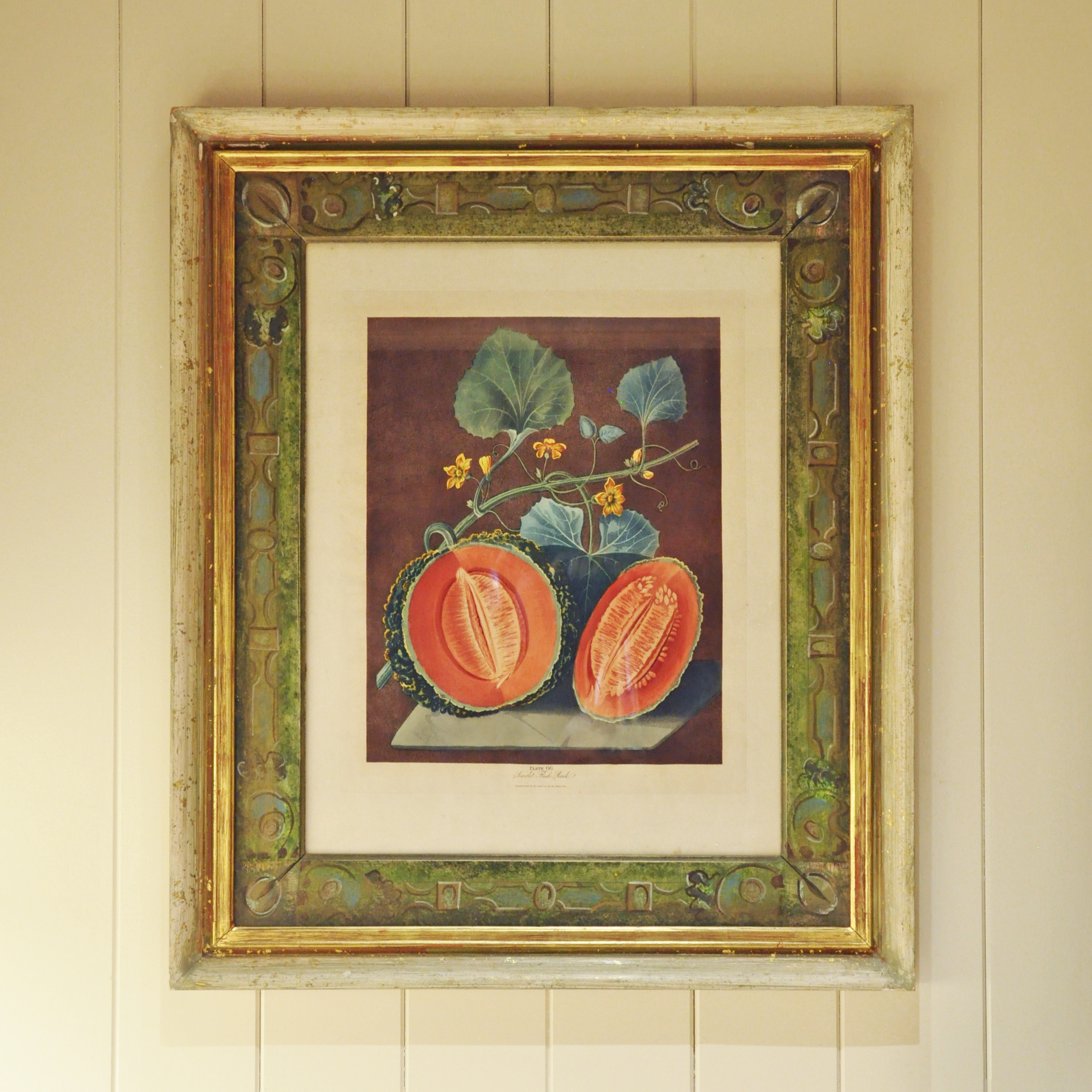
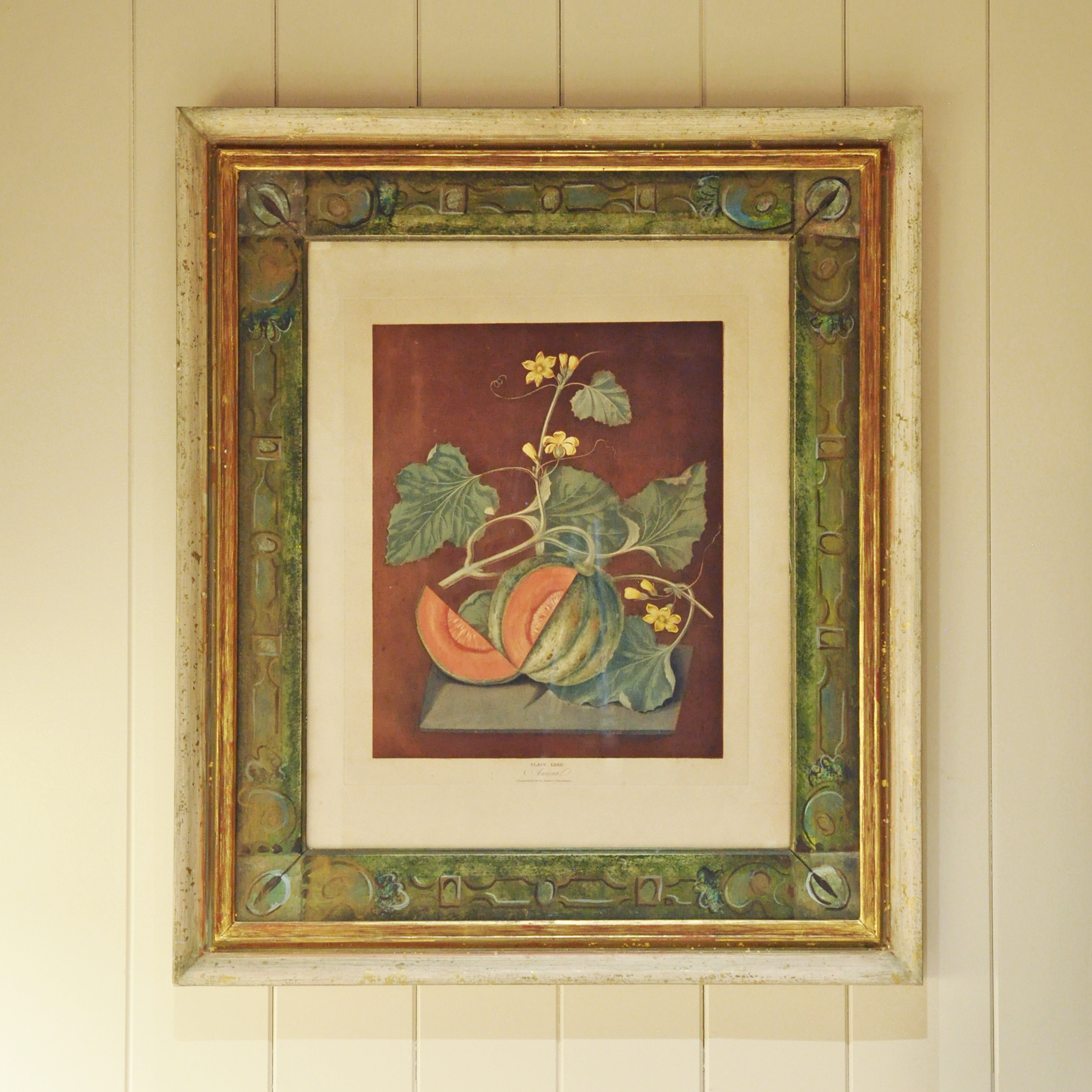
Pomona Britannica was Brookshaw’s most notable publication. Named after the Roman goddess of fruit trees, gardens, and orchards, Brookshaw intended the volume to be the English “country gentleman’s” guide to the science of classifying and identifying fruits (pomology) so that they might instruct their gardeners on implementing fashionable fruit varietals. Many of Brookshaw’s models came from the Royal Gardens at Hampton Court and Kensington Gardens. Each print featured one fruit, often life-size, including detailed depictions of its flower and leaves.
George Brookshaw was born in Birmingham, England, and spent the early stages of his career building fine cabinets detailed with hand-painted botanical motifs. His clientele included none other than the Prince of Wales and examples of his cabinetry may be seen today at the Victoria & Albert Museum, London. However, after a period of financial difficulty, Brookshaw turned to botanical illustration and gave flower-painting lessons.
Pomona Britannica was Brookshaw’s most notable publication. Named after the Roman goddess of fruit trees, gardens, and orchards, Brookshaw intended the volume to be the English “country gentleman’s” guide to the science of classifying and identifying fruits (pomology) so that they might instruct their gardeners on implementing fashionable fruit varietals. Many of Brookshaw’s models came from the Royal Gardens at Hampton Court and Kensington Gardens. Each print featured one fruit, often life-size, including detailed depictions of its flower and leaves.