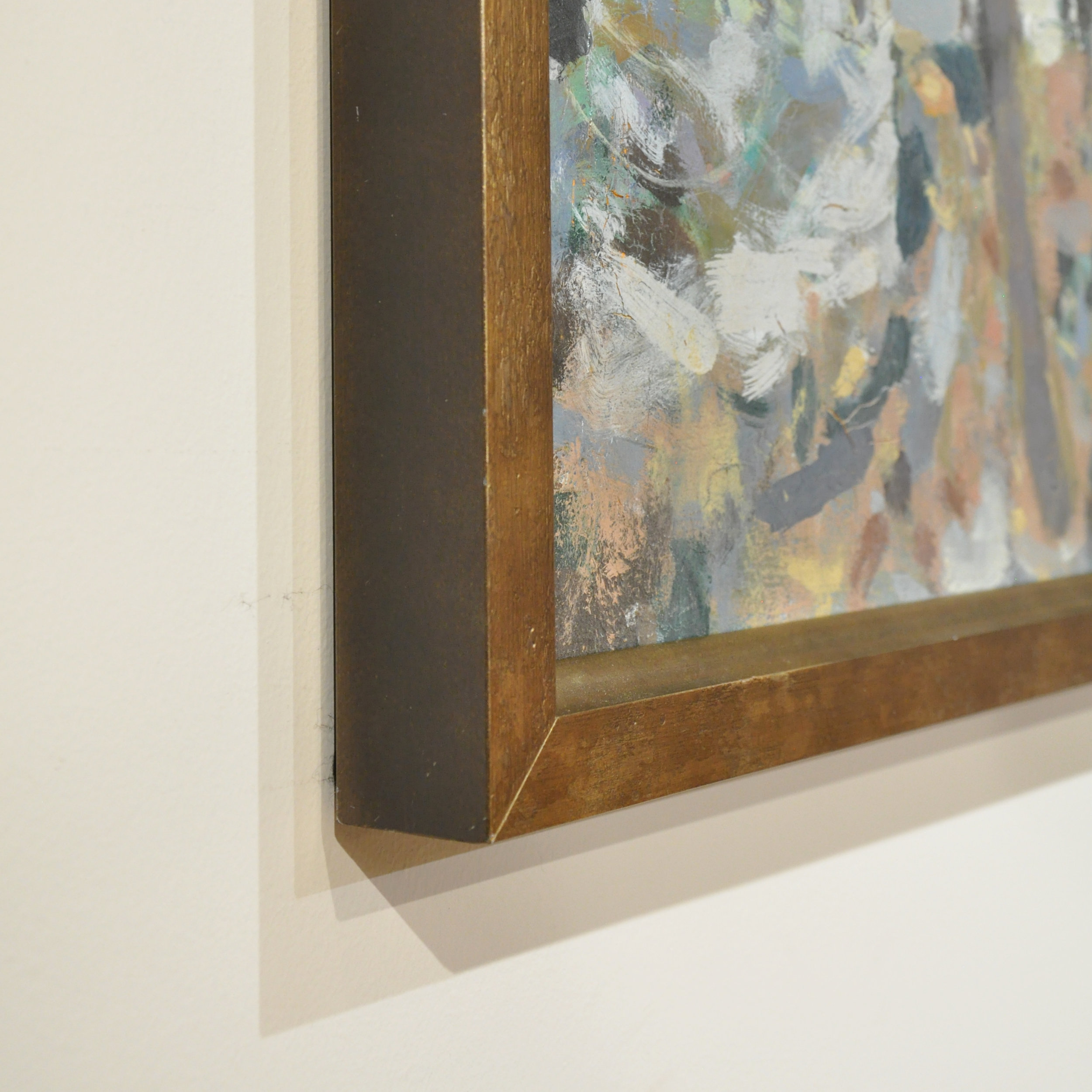
 Image 1 of 3
Image 2 of 3
Image 3 of 3
Image 1 of 3
Image 2 of 3
Image 3 of 3
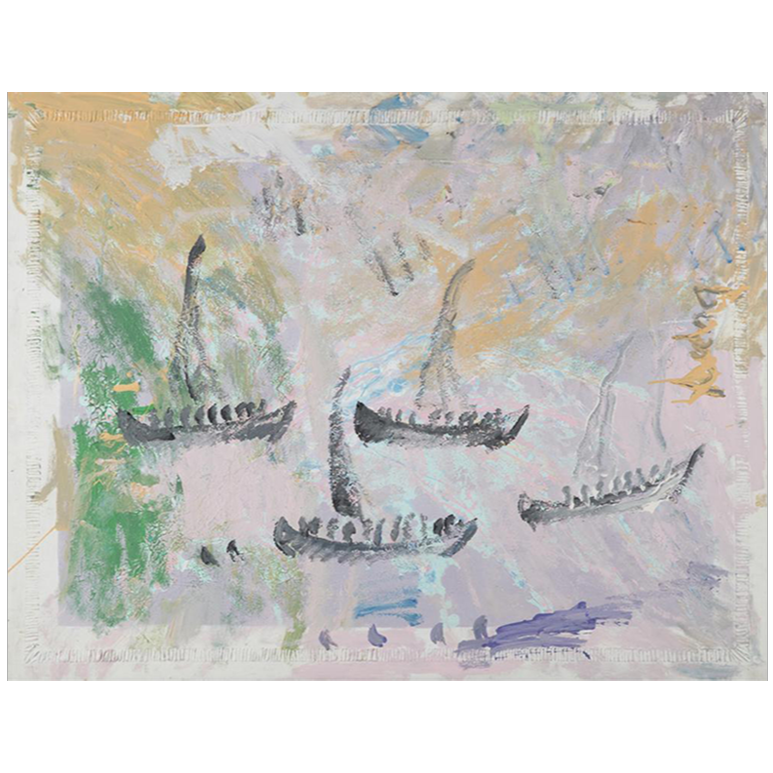
Purvis Young was a self-taught American artist of Bahamian descent, whose work emerged from the streets of Overtown, a historically Black neighborhood in Miami. Working with a raw and improvisational energy, Young created a deeply personal visual language that fused painting, drawing, and collage— often on found materials such as scrap wood, cardboard, and book pages. His art was both deeply autobiographical and broadly allegorical, reflecting the struggles, hopes, and spiritual resilience of his community. Young’s inspiration was eclectic and expansive. Though he received no formal training, he educated himself through art books, documentaries, American history, civil rights struggles, and spiritual folklore. His recurring motifs of wild horses, sages, warriors, angels, cityscapes, funeral processions, musicians, and boats formed a symbolic vocabulary that conveyed both the burden of injustice and the redemptive possibility of transcendence. Often referred to as an urban griot, Young transformed the detritus of daily life into a spiritual and political language uniquely his own. He began his public practice in the 1970s by installing hundreds of paintings in alleyways and abandoned storefronts, most famously along Goodbread Alley in Overtown, capturing the attention of the art world with both his vision and his materials. In 2006, Purvis of Overtown, a feature-length documentary, was released, chronicling his life and artmaking. Today, Young's work is widely celebrated and held in the permanent collections of major institutions, including The Metropolitan Museum of Art, the Whitney Museum of American Art, the Smithsonian American Art Museum, the Rubell Museum, and the Centre Pompidou in Paris
Purvis Young was a self-taught American artist of Bahamian descent, whose work emerged from the streets of Overtown, a historically Black neighborhood in Miami. Working with a raw and improvisational energy, Young created a deeply personal visual language that fused painting, drawing, and collage— often on found materials such as scrap wood, cardboard, and book pages. His art was both deeply autobiographical and broadly allegorical, reflecting the struggles, hopes, and spiritual resilience of his community. Young’s inspiration was eclectic and expansive. Though he received no formal training, he educated himself through art books, documentaries, American history, civil rights struggles, and spiritual folklore. His recurring motifs of wild horses, sages, warriors, angels, cityscapes, funeral processions, musicians, and boats formed a symbolic vocabulary that conveyed both the burden of injustice and the redemptive possibility of transcendence. Often referred to as an urban griot, Young transformed the detritus of daily life into a spiritual and political language uniquely his own. He began his public practice in the 1970s by installing hundreds of paintings in alleyways and abandoned storefronts, most famously along Goodbread Alley in Overtown, capturing the attention of the art world with both his vision and his materials. In 2006, Purvis of Overtown, a feature-length documentary, was released, chronicling his life and artmaking. Today, Young's work is widely celebrated and held in the permanent collections of major institutions, including The Metropolitan Museum of Art, the Whitney Museum of American Art, the Smithsonian American Art Museum, the Rubell Museum, and the Centre Pompidou in Paris